
The learning behind the play.
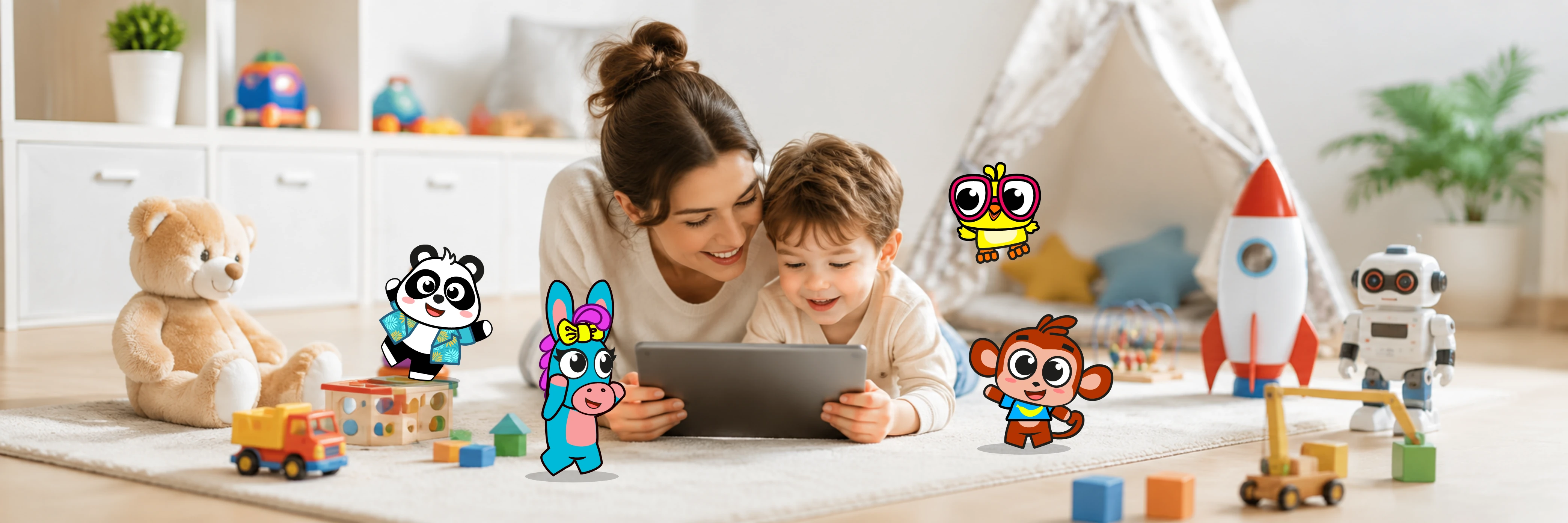
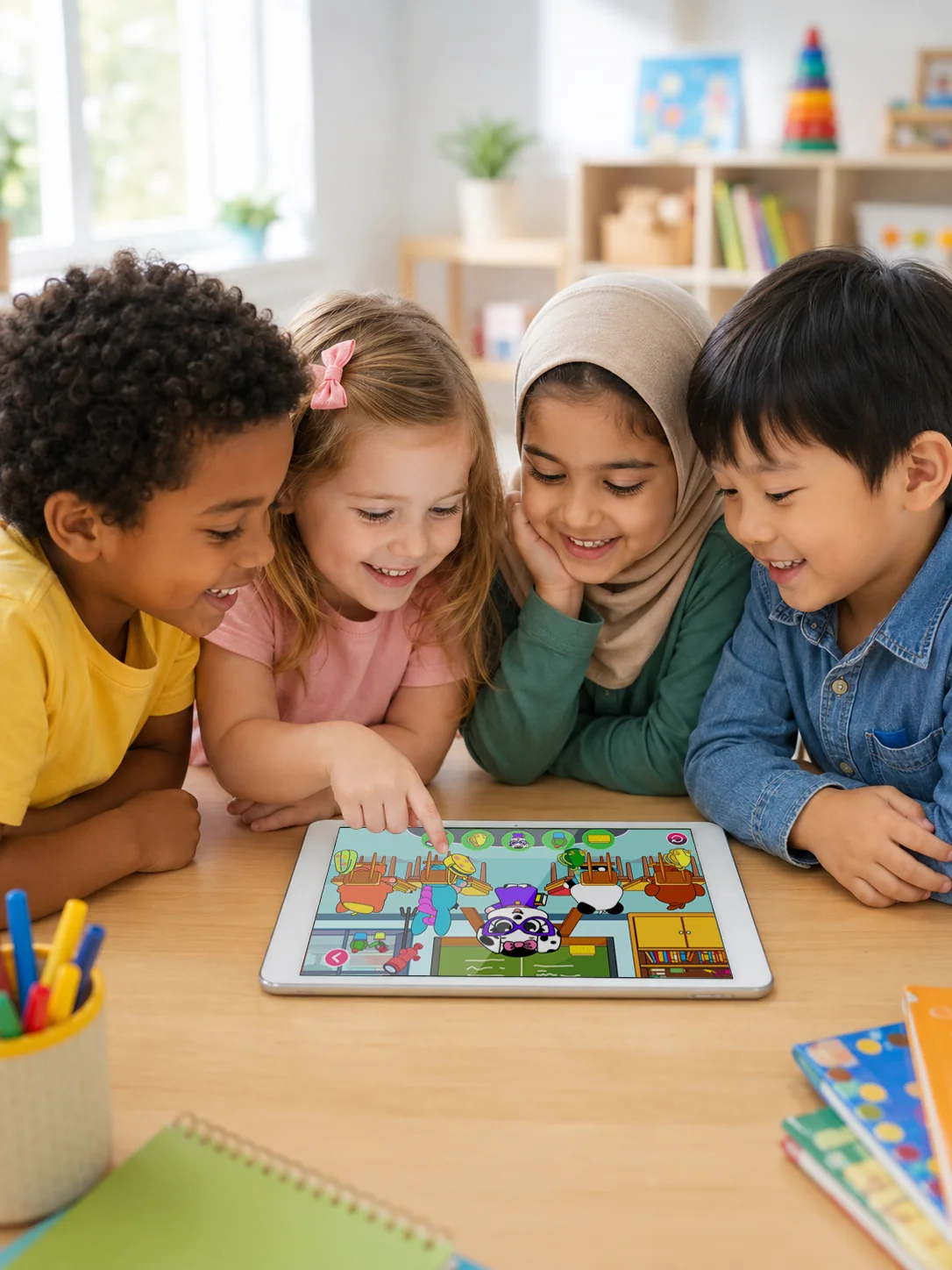
Tiny Minies was built on a single conviction: in the early years, play is how children think. Every game, story, character and activity grows from that conviction - and from the research and educators who have spent decades proving it.
Play isn’t a break from learning. It is learning.
The foundation of everything we make - and one of the most replicated findings in developmental science.
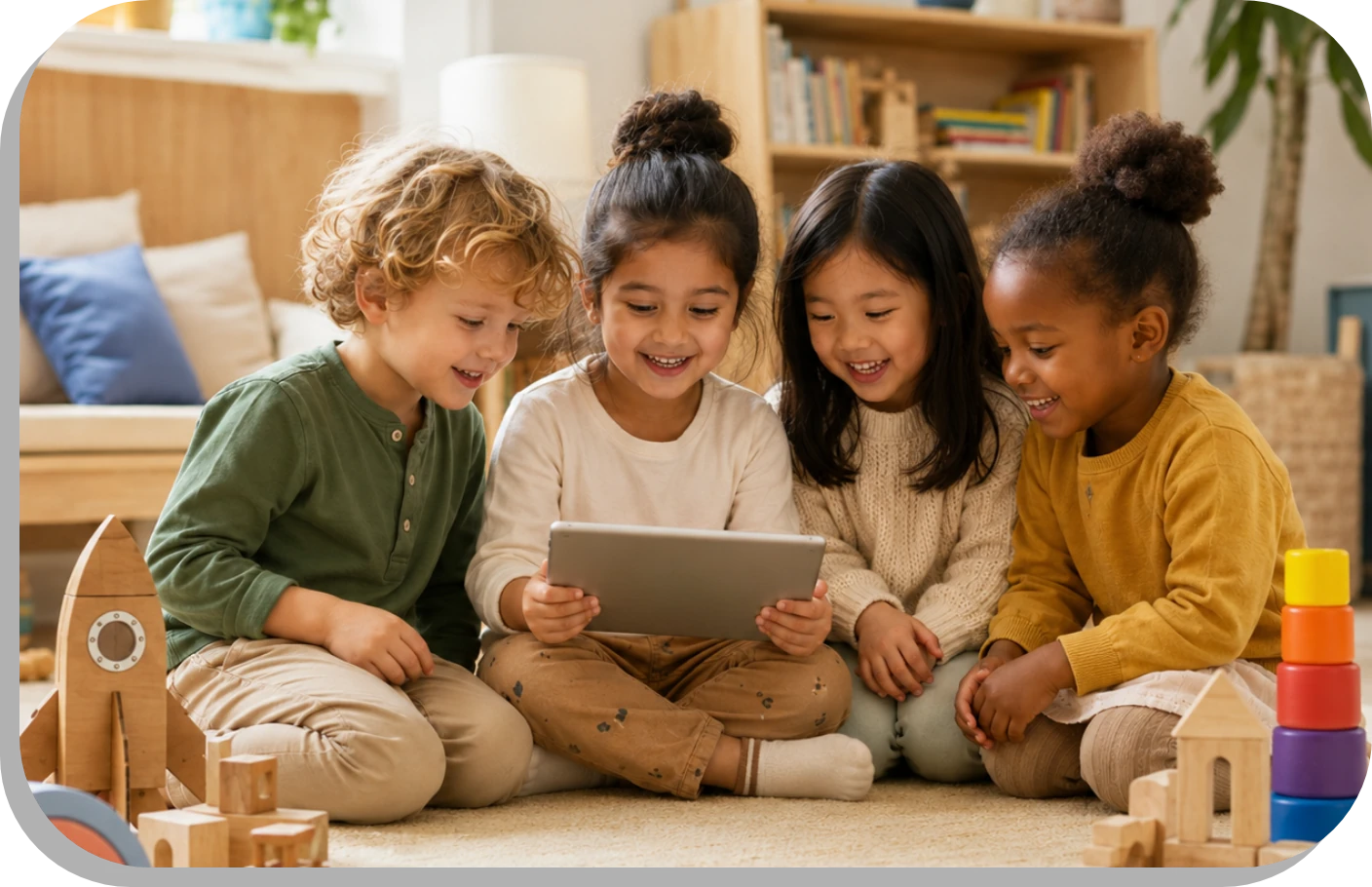
For children aged two to six, play is the primary language of development. It is how they make sense of emotions, test cause and effect, build social bonds and construct their understanding of the world.
This is not a soft idea. The American Academy of Pediatrics calls play essential to brain development and executive function. NAEYC builds its entire standard of quality around it. And a 2022 meta-analysis in Child Development found that guided play outperformed direct instruction in early maths, shape knowledge and task switching - the very skills school readiness is built on.
But not all screen time is equal. In a landmark review of 80,000 “educational” apps, Hirsh-Pasek and colleagues found that the ones which actually teach share four qualities: they are active, engaged, meaningful and socially interactive.
Those four pillars are our design brief. Tiny Minies was built from this foundation up - not as an app that makes learning feel like play, but as one built on the understanding that they are the same thing. Every piece of content is created with early childhood educators and developmental psychologists, and every interaction is intentional, safe and free from the distractions that undermine genuine engagement.
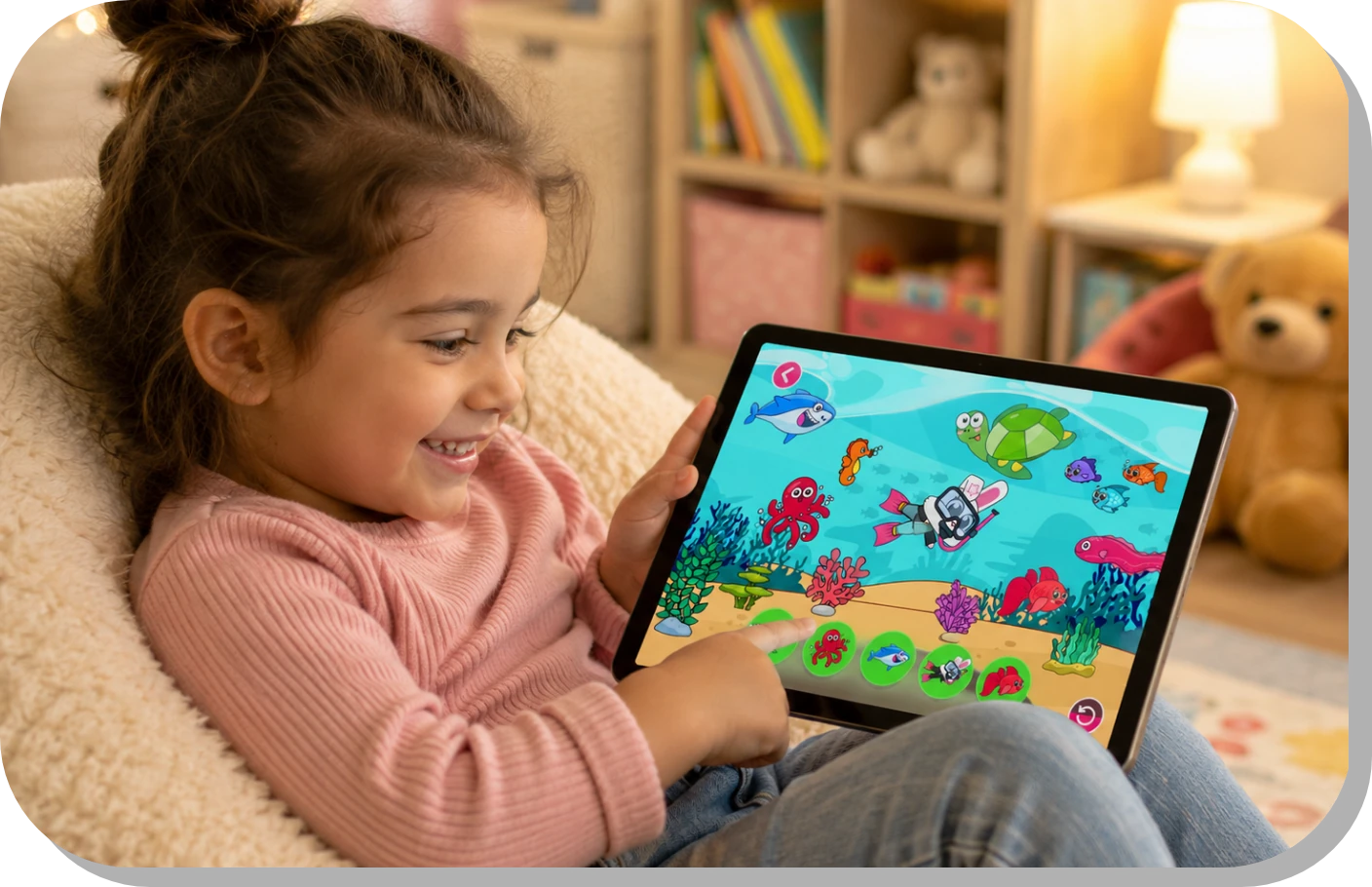
The result is something parents can feel good about and educators can trust - a digital environment where curiosity is always the engine.
Six domains. Every dimension of development.
All Tiny Minies content is mapped to six developmental domains - five recognised by early childhood frameworks worldwide, and one most frameworks rarely name on its own.
-
Language & Communication
Listening, speaking and early literacy. Stories, read-alouds and song-based content lay the foundation for confident expression.
-
Cognitive & Reasoning
Thinking, logic and problem-solving. Children build mental frameworks through games that adapt to them, growing more challenging as they do.
-
Creativity & Imagination
Art, music and open-ended play. Every child has a unique voice - we give them the tools to find it.
-
Social-Emotional
Empathy, self-regulation and friendship. Our characters model the skills children need and make practicing them feel like play.
-
Fine Motor & Physical
Coordination, movement and body awareness. From yoga to crafts, activities that help children inhabit their bodies with confidence.
-
Mindfulness & Wellbeing - the sixth domain
Focus, calm and emotional resilience. What most frameworks fold into self-regulation, we treat as a domain of its own: guided breathing, meditation and wellbeing routines children can carry into everyday life.

These six domains are also why Tiny Minies sits comfortably inside so many different teaching philosophies.
Curriculum-neutral.
Framework-aligned.
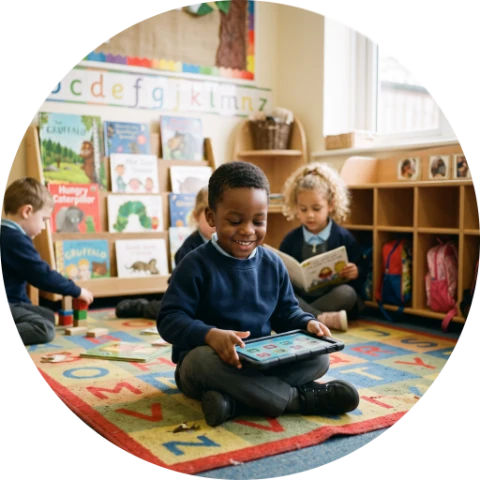
Every major early childhood approach - Montessori, Reggio Emilia, EYFS, IB PYP, the Türkiye Century Education Model and more - shares a core belief that play and whole-child development matter. Tiny Minies is built from that shared ground. It doesn't belong to any single philosophy. It complements all of them.
-
Montessori
Tiny Minies shares Montessori’s respect for the child’s natural learning pace. Self-directed navigation, sequential skill-building and a distraction-free environment make it a thoughtful digital companion for Montessori families who choose to introduce intentional screen time - and printable activities carry the work off the screen and into small hands.
Explore the alignment -
STEM / STEAM
From logic games to pattern recognition and printable making challenges, Tiny Minies nurtures the scientific curiosity and creative thinking that STEM/STEAM education builds from day one.
Explore the alignment -
Türkiye Century Education Model
Türkiye’s 2024 preschool curriculum (the Maarif Model) is built on skills, values and play - the same ground Tiny Minies stands on. We’ve mapped our library to the program’s learning outcomes one by one, and new content is developed with those outcomes in mind - from Turkish songs and letter sounds to stories that carry the virtue-value-action spirit inside the plot.
Explore the alignment -
IB PYP
Tiny Minies’ characters are living Learner Profiles - curious, caring, open-minded, risk-taking. Its five-language platform supports the international mindedness at the heart of PYP.
Explore the alignment -
Developmentally Appropriate Practice (DAP)
Tiny Minies was built on the same values as DAP: play-based, age-staged, culturally inclusive and joyful. Few digital resources are built this closely to DAP principles for children aged two to six.
Explore the alignment -
HighScope
Tiny Minies content maps directly to HighScope’s Key Developmental Indicators, making it easy for teachers to identify activities that support specific developmental goals and a natural catalyst for Plan-Do-Review conversations.
Explore the alignment -
Reggio Emilia
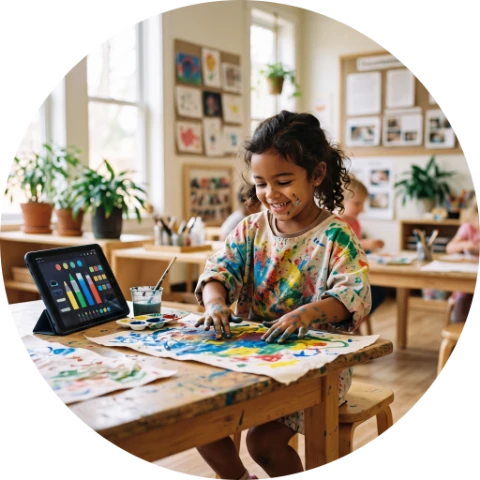
In the Reggio spirit, Tiny Minies offers children multiple languages of expression - art, music, movement and storytelling. Children’s work is saved in the app, so it can be revisited, shown and talked about: the kind of documentation Reggio educators build inquiry around.
Explore the alignment -
EYFS
Of all early childhood frameworks, the EYFS is the one Tiny Minies maps onto most directly - our content reaches into all seven areas of learning, and runs deepest where the EYFS says the early years matter most: the three prime areas and early math.
Explore the alignment -
Waldorf / Steiner
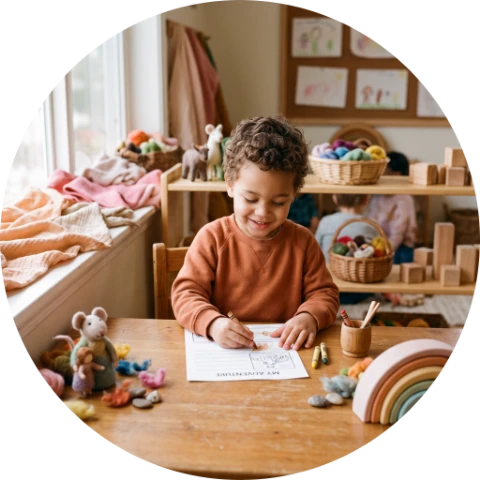
We respect Waldorf’s deliberate approach to screen time. For Waldorf-aligned families who do introduce digital content, Tiny Minies offers some of the most nature-connected, story-rich and unhurried content available on a screen - including a listening-first library of tales and songs that works with the screen face-down.
Explore the alignment -
Nature-Based Learning
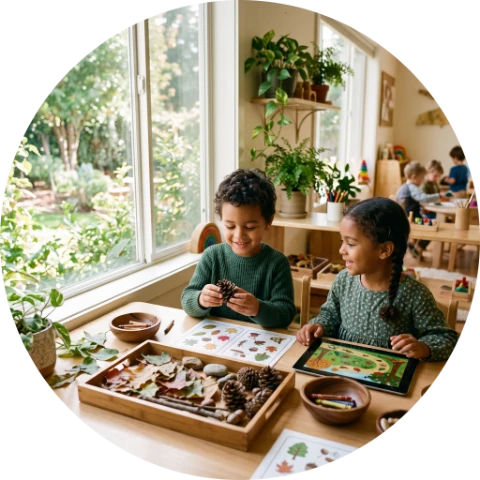
Tiny Minies can’t be a forest. But Naga’s garden, Lora’s explorations, seasonal themes and outdoor extension printables make it a thoughtful indoor companion for nature-based learners.
Explore the alignment
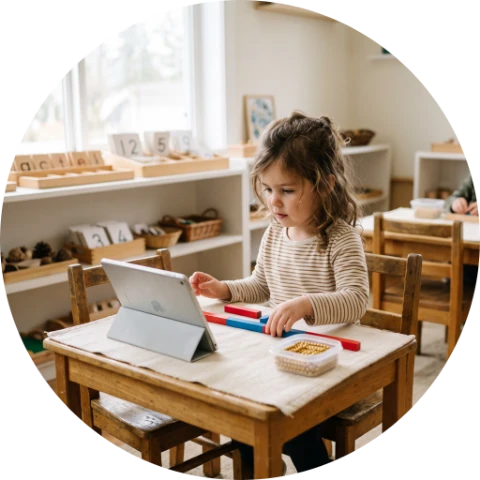
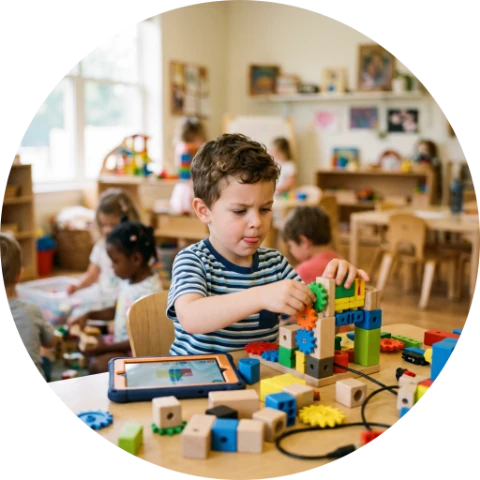
Are you a teacher?
Tell us about your classroom - the age group, your approach, how you’d like to use it - and we’ll suggest the setup that fits. Curriculum mapping, content recommendations or school access.
Let’s find your fitThe reviews we didn’t write.
We gave early childhood specialists full access and asked for an honest read.
-
“An excellent balance between entertainment and learning.”
Prof. Dr. Kylie Peppler
Professor of Education and Informatics, University of California, Irvine
-
“It is clear that the creators understand little learners.”
Dr. Sue Allingham
Early Childhood Education Specialist

Now see it in practice.
Six domains, ten frameworks and a decade of research - all of it inside an app your child will just call fun.



Scan to download free
Try It Free